

Contents
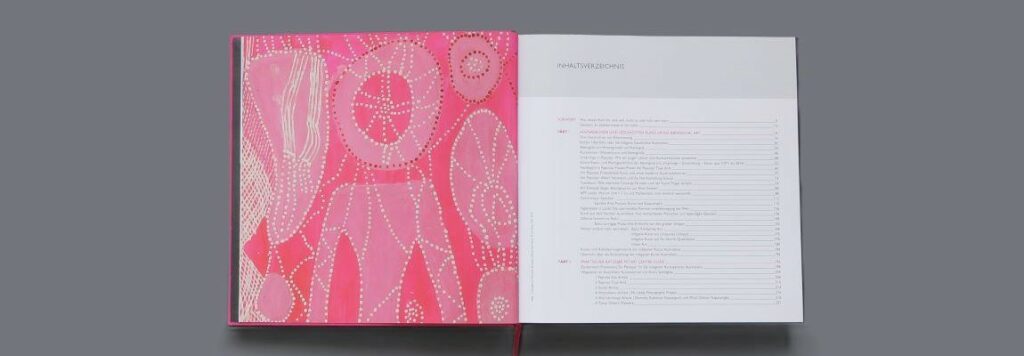
Indigenous Australian art is the art form with the world’s longest tradition. Beneath its seemingly aesthetic surface lie numerous cultural, social and political dimensions.
In their work, Aboriginal artists tell stories of the world’s oldest living culture on earth, their deep connections to land, see and community, but also of land theft, child abduction (so-called „Stolen Generation“) and discrimination/marginalization that continues to this day.
PART I contains stories surrounding the background of Aboriginal art, its origins and dissemination, its perception as Fine Art and its acceptance and significance within the global art market. These are presented from a German perspective through heterogeneous narratives, each highlighting different facets of this versatile art form to approach Contemporary Aboriginal Art as one of the most exciting modern art movements worldwide.
Additionally, PART I introduces the continent’s various art regions, with a focus on the Central and Western Deserts and art from Arnhem Land, specifically covering the period from 2007 to 2024. This era was particularly shaped by the rise of the APY Lands. The Spinifex Arts Project from the Great Victoria Desert and Buku-Larrŋgay Mulka from East Arnhem Land play a special role in INDIGENIUS, as they were the favorite art centres of the German ARTKELCH audience.
PART II serves as a practical guide: a directory of Indigenous art centres, museums, and galleries – the places where high-quality Indigenous Australian art can be viewed, purchased and celebrated. It is intended to guide interested readers through the unregulated and often unscrupulous Aboriginal art market. Above all, this section aims to educate on provenance, the work of Indigenous art centres and the fair treatment of Indigenous Australian art.
In doing so, INDIGENIUS aims to empower museum directors, curators, fair selection committees, ambitious art collectors and newcomers to Contemporary Aboriginal Art to make informed selection and purchasing decisions.
PART III describes the dissemination and reception of Contemporary Aboriginal art in Germany over the last twenty years and my own personal experience as a gallerist promoting Indigenous Australian art on the other side of the world. In doing so, I also reveal market insight and insider details regarding the (economic) success of ARTKELCH, as well as of individual art centres and artists. In ‚Confessions of a Gallery: Stories to Make You Cry and Laugh‘, I offer readers a look behind the scenes, sharing the (sometimes unbelievable) experiences of a gallerist for contemporary Aboriginal art in Germany.“
Thus, INDIGENIUS is not only a beautiful, but above all an educational book. Its goal is to pass on as much of my expertise and experience as possible, in a format that allows a diverse readership to decide for themselves how deeply they wish to delve into specific chapters.
Photo:
‚Baratjala‘ by Nongirrŋa Marawili © Buku-Larrŋgay Mulka